

Beach activities and safety
Translation of my article: link.
Diving headfirst into open water is highly inadvisable. The so-called diver's injury is extremely unpredictable. You may get it where you never expected... That is why diving headfirst is only allowed in specialized sports pools under the supervision of a coach.
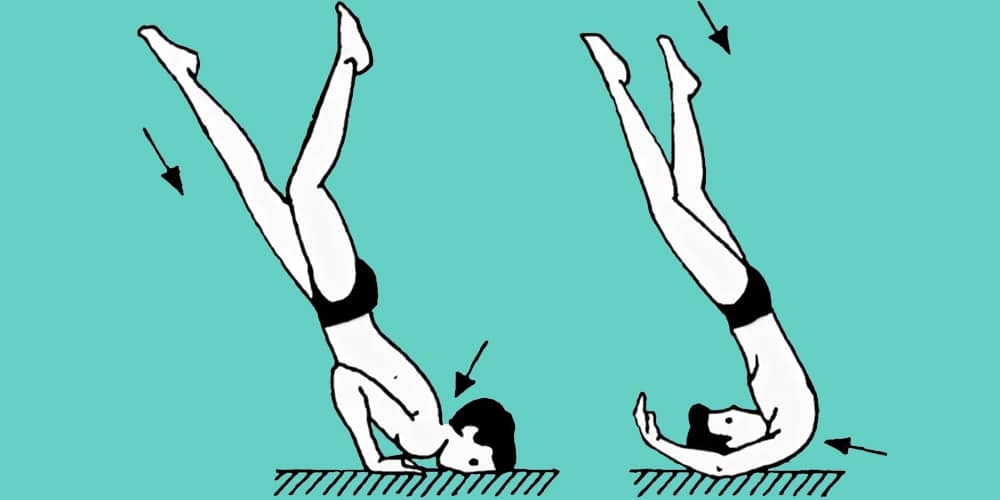
Diver's injury
I know of a situation where a group of people were jumping into a river from a bridge, and everything was fine—the spot had been checked, and the bottom was clear. Everyone dived in several times. But one man didn't come back up. He was rescued but ended up as a paralyzed disabled person. As it turned out, there was a log floating in the water. Alas.
In my case, we were diving off a bridge in the Mediterranean Sea. This was not our first time; we had been diving there for several days. But one day we decided to have an evening stroll and stopped at that bridge. There were three of us: my brother, our friend, and me. Our friend was feeling down and in order to cheer him up, I suggested we go for a swim in the cool evening water. My brother and I took several dives. Then I persuaded our friend to dive with us: he was the tallest one, approximately 1.9 meters, so he dived from the side of the bridge furthest from the shore, my brother dived a little closer to the shore, and I was closest to the shore, as my height is only 1.73 meters. But I didn't take into account that the bottom might be steep and/or the low tide in the evening... I just checked, the difference between the daytime and evening water levels in Limassol in August can reach 15-20 centimeters. Who knows, perhaps those 15 centimeters would have been enough for me to just scrape my chest a little against the sand, like many other divers.
My situation was very similar to the tragedy of the character in “The Sea Inside” movie. Everything was pretty much the same: thoughts about life and love before the dive (probably that was the reason why I wanted to cheer myself and my sad friend up), then the impact, the sand bottom, memories of the most precious moments in life... Even the same perception of how life had changed:
I barely touched the sandy bottom with my chin. That was it. My body switched off. I didn't even lose consciousness. The impact was similar to the one that older people will remember: it was as if you were sitting in a guest kitchen under a shelf, which people used to hang above their heads in the 90s, and then stood up, forgetting about the shelf and bumping your head on it. But the impact was on my chin. I opened my eyes and looked at the bottom, holding my breath. I hoped that my friends would manage to pull me out before I started gasping for air. I was lucky, as the guys realized that something was wrong and managed to pull me out. I said that my neck seemed to be broken, as I couldn't feel my body. They pulled me carefully onto the shore. I was thinking about how much trouble I had caused my friends: how many problems there would be if I died and my body had to be transported to Russia... And I started apologizing to them. I also thought that I didn't want to die like that. I wanted to hug my girlfriend one more time, embrace my parents and all my loved ones.
Some of my memories
An ambulance arrived. I was placed on a stretcher and carried into the bright cabin of the ambulance. Then I fell asleep, possibly due to the action of some medication. I woke up in the hospital. A young nurse was washing the sand off me, and I kept repeating, “Sorry... I apologize...” I was very embarrassed by the fact that she had to wash me.
I woke up again in the hospital room, already on a drip. It was nighttime. The neurosurgeon, my brother, and my friend were standing beside me. The neurosurgeon spoke Russian perfectly. He had studied in the USSR and was still collaborating with the Burdenko Neurosurgery Research Center. He said that the surgery would take place early in the morning. He also explained that the injury was complex, but that everything would be fine. The anti-inflammatory hormonal drugs made my biceps sensitive, and they hurt due to excessive contraction—my arms were folding at the elbows, with my hands pressed against my chest. (There is a concept called the “fetal position” — a position in which a person lies on the side, curled up, with knees pulled up to the abdomen or chest, and arms usually tucked under the chest. The body attempts to take this position when the spinal cord or brain is damaged). I asked my brother to straighten my arms, and I felt a little better after that.
I woke up again in the operating room: I was being prepared for surgery. A nice woman spoke to me in Russian. I felt very calm there. It was probably because of some medication. The woman asked me about my condition. I talked to her. I remembered that I had removable dentures, and she helped me take them out. She told me not to be afraid and to trust the doctors. I replied that I trusted them completely. And I was indeed very calm at that moment. I didn't feel that I was close to death. In fact, I felt a calm confidence that everything would be fine.
I woke up in the hospital room where I subsequently spent two weeks. I was amazed by the staff's treatment of me. Every morning, a smiling nurse would come in and say “Good morning! Are you okay, Sergey?”. Of course, these words mean the following to someone who has broken his or her neck: “How do you feel? Are you completely screwed or is it bearable?”. To this day, when I encounter random misfortunes, my brother teases me with the words “Are you okay, Sergey?”.
Every few hours, different medical staff would come in to check my temperature, blood pressure, and oxygen saturation. They blocked the catheter to train my bladder. I am mentioning this because it is a common problem in Russia: disabled people spend several months in hospital, and they are not informed about the need to simulate physiological bladder filling, which causes it to become atrophied, and then they spend months and years trying to restore bladder function. Moreover, practically everyone leaves Russian hospitals with bedsores (Later on I will write a separate article on how to deal with this situation and who is responsible for it).
Every second day the nurses changed my bedding and washed me. Apparently, one of the nurses came to massage my feet in her spare time. They allowed my brother to stay overnight with me so he didn't have to travel to a hotel on the other side of the city. More than that, the nurses even brought him a second serving of food. The meals were very rich in variety and delicious.
When the time came to leave the hospital, one of the nurses, of Georgian descent and fluent in Russian, offered to stay at her family's home for a while in case there were any problems with the flight. Indeed, problems arose. We had to buy three tickets for me in order to fly in a lying position, and a ticket for my brother. We bought them online for 2,000 euros, but when my brother arrived at the airport to arrange the flight, an airport employee explained that the tickets purchased online were not valid and that he had to buy tickets for the exact same flight at the ticket office for 6,000 euros... Eventually, we returned the tickets and bought two regular economy class tickets. Of course, it was risky to fly in a seated position, but one can't help it when there is a glimmer in businessmen's eyes whenever they see a disabled person... It is worth considering the cost of wheelchairs, when one standard, but high-quality wheelchair can cost as much as three premium-class Bianchi road bikes.
Afterwards, I faced the contrast while staying in the fee-based department of the Moscow Rehabilitation Center, where a bed (excluding the cost of procedures) cost exactly the same amount as in Turkey. The nurses were also very considerate and kind, but the level of service was several decades behind, apparently due to the greed of the management. If you are interested, I will post a comparison of the major differences.
But the essence of my memories is quite simple: never dive headfirst into water and tell your children not to do so.
Just in case it wasn't enough, here's another example (I bet there are tons of these): a guy on a sandy beach just wants to have a quick dip and then get back to his friends who are getting ready to head home. Are there any of you reading this who've never done that?
That is why, when a person familiar with this kind of injury watches a video on social media in which a beautiful girl dives headfirst into the sea and swims very close to the bottom... such person will think: certainly, the footage is lovely, but it is lovely just until it turns into the necessity to use diapers, urinary catheters, and other "delights" of disabled person, who suffered diver's injury.

A risky dive
Of course, there are even more ridiculous cases. For example, a man woke up at night and went to the bathroom to pee... In the darkness, he bumped his forehead against the open bathroom door. He woke up in the morning already paralyzed, when his wife called an ambulance. So it is possible to get hurt even when you are not doing anything special. In an apartment with a dark hallway or lobby, one can use inexpensive rechargeable lights with motion sensors, which are powerful enough to enable seeing obstacles when sleepwalking to the bathroom at night.
All in all, be a bit more careful than we were, and don't let yourself fall down “out of the blue”.
(Automatic subtitles)
UPD:
We got into a bit of an argument with one of the chat members. The layman made a misleading assumption: “What's the point of talking about this if the injury is so rare? Far more people break their necks in car accidents...”
It may seem like a very rare occurrence, especially given the reality in Russia: due to the inaccessibility of the surrounding environment and difficulties in obtaining medical equipment (wheelchairs) provided by the state, the vast majority of people with disabilities spend their days within the four walls of their own homes or residential care facilities. A couple of years ago, the head of one of Moscow's clinics, together with a medical specialist, said to me: “What do you need an electric wheelchair for? You're lying in bed at home... So keep lying there. Everything's fine. You're not going to get such an expensive wheelchair from anyone.” That is the reason for my negative attitude toward such officials, and I strive to assist individuals with disabilities in obtaining social guarantees. This is especially true for those who lack the ability to defend their rights independently due to circumstances (education at home or in a boarding school, absence of relatives or friends who could assist them in defending their rights, etc.).
But let's get back to the question of the diver's injury. Is it really that less common than a neck injury caused by a car accident?
For example, here is the data on neck injuries in Norway:
21% - as a result of car accidents.
4% - divers.
Is it significantly less than in traffic accidents? Or is it not less at all? After all, the swimming season in Norway is only two months long. As we can see, the total percentage of divers with neck injuries is 4 times lower than those with neck injuries from traffic accidents, but the swimming season lasts only 2 months a year. People use vehicles out of necessity, all year round, while diving is something only young people do for fun...
Here is the data regarding spinal fractures in Russia:
- Traffic accidents - 29.5%, only 31% of which are neck fractures. That is, of the total number of spinal fractures, only 10% are neck fractures caused by traffic accidents. The rest are thoracic and lumbar fractures;
- The percentage of divers is 17,5.
Moreover, the swimming season in Russia lasts 2-4 months, depending on the region.
As a conclusion, I will quote the words of a neurosurgeon, head of the spinal surgery and pain treatment department at Illinsk Hospital, Doctor of Medical Sciences Sergey MLYAVYKH:
"""""
– How often do you deal with diver's injury in your work?
– Sadly, it happens every year. Perhaps due to a number of circumstances, our country is having some pretty depressing stats on diver injuries. Is there any way we can change this? Primarily, we need to ensure that children understand that diving in open water bodies is not permissible, especially in the sea, the ocean, and our rivers, which are not transparent. Often, we do not know what the water level is. If there was a high water level last year, this year water level may be low.
Everything indicates that the very act of diving implies a decrease in the self-preservation instinct. Such decrease is observed in many countries, but in Russia, this love for diving is somehow special, perhaps because summer is short and people want to make the most of this time: to swim and dive in open water. And here we should instruct children that diving in open water is unacceptable.
– Why don't you mention pools? The Pravmir Foundation has helped a large number of people who installed pools at their country houses, dived into them, and suffered serious injuries.
– Once again, to me it's just a sign of a low self-preservation instinct of children and their parents. I assure you that every pool we buy for our country houses, regardless of whether it is collapsible or inflatable, has a sign that says “Diving is prohibited”. But even though the sign is there, we continue to break the rule mindlessly.
"""""